
The Liverpool Rebuild: The Red’s Next Great Team
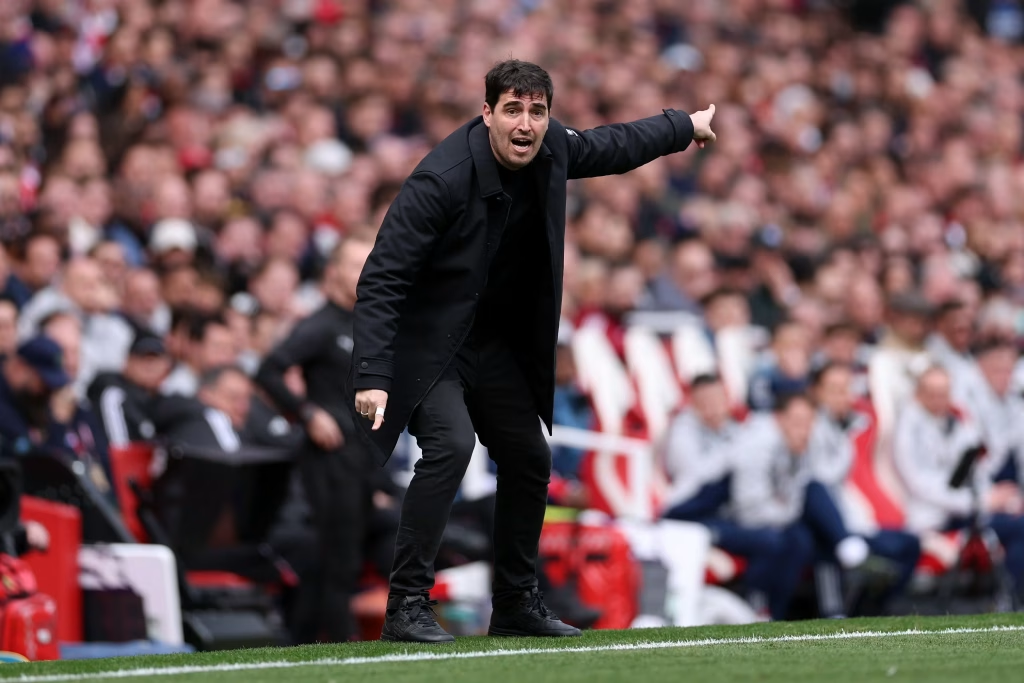
Liverpool thought they had already completed the difficult part. Arne Slot delivered a Premier League title in 2024/25 and proved the club could survive life after Jürgen Klopp, but football rarely stands still and a disappointing follow-up season eventually forced Liverpool into another reset. This is the Liverpool rebuild of 2026.
This is not a crisis but a crossroads. Liverpool still have players like Alisson, Virgil van Dijk, Florian Wirtz, Ryan Gravenberch and Dominik Szoboszlai, so the foundations remain strong. What they lack is a clear identity for the next era. The next manager is not simply inheriting a squad; he is helping define what Liverpool should become. That is why Andoni Iraola has emerged as such a compelling candidate, not because he represents the past but because he might be the coach best equipped for the Liverpool rebuild of 2026.
Quick Navigation
Why Andoni Iraola?
At Bournemouth his teams have consistently played brave football, attacking quickly, defending aggressively and playing with an intensity that feels naturally suited to Anfield. Most importantly, there is purpose behind everything they do. Liverpool do not need endless possession, nor do they need to dominate the ball simply for the sake of it. What they need is a team that attacks with conviction and defends with courage. His style also fits the players Liverpool already have, ready for the Liverpool rebuild.
Wirtz thrives when attacks move quickly. Szoboszlai loves attacking open spaces, while Gravenberch excels at carrying possession through pressure.
The attraction is not that Iraola can recreate Liverpool’s previous era, but that he can build the next one: a younger, faster and more adaptable Liverpool.
The Defence
Who Stays
- Virgil van Dijk;
- Giovanni Leoni;
- Milos Kerkez;
- Conor Bradley.
Who Leaves
- Ibrahima Konate (Free Transfer);
- Joe Gomez (€18M–€25M);
- Jeremie Frimpong (€35M–€45M).
Who Arrives
- Nico Schlotterbeck (Borussia Dortmund);
- Jan Paul van Hecke (Brighton and Hove Albion);
- Maxime Esteve (Burnley);
- David Raum (RB Leipzig);
- Nordi Mukiele (Sunderland).
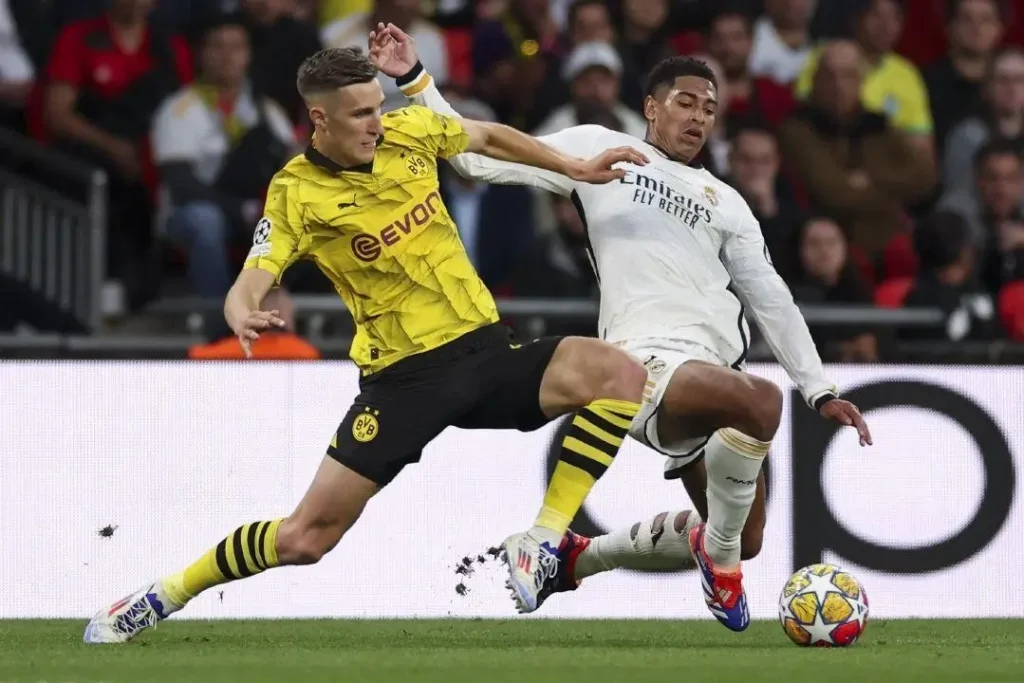
The Liverpool rebuild starts with a simple reality: Van Dijk remains one of Liverpool’s most important players. His leadership, authority and experience are still invaluable, but succession planning cannot wait forever. Liverpool do not need to replace Van Dijk today. They need to prepare for tomorrow.
That is where Schlotterbeck (26) comes in. He has the profile Liverpool will eventually need: aggressive defending, recovery pace and the confidence to play forward quickly. In an Iraola system, he can step into midfield, break pressure and immediately find Wirtz between the lines. He could be more than just a replacement for Van Dijk, a bridge between Liverpool’s current era and the next one.
Van Hecke (25) becomes Konate’s direct replacement on the right side of Liverpool’s defence. He already knows the Premier League playing for Brighton & Hove Albion, has the physical profile, great ball distribution and defensive aggression needed to partner Van Dijk at right centre-back. Alongside him, Burnley’s Esteve (24) adds valuable depth and natural left-footed balance, ensuring the squad has quality options across multiple defensive roles and young defenders improving while already being at the club, like Giovanni Leoni. Esteve would be a optional target for Liverpool in this rebuild.
Kerkez and Bradley remain an important part of the Liverpool rebuild. While Raum and Mukiele would bring immediate experience and leadership, Kerkez and Bradley give Liverpool younger options capable of developing into the club’s long-term solution at left-back.
The full-backs complete the structure. Raum (28) brings experience to a younger defensive unit while also offering quality deliveries and leadership on the left side. On the opposite flank, Mukiele (28) provides something Liverpool have occasionally lacked with Frimpong and previously Alexander-Arnold: stability and defensive balance when the team commits forward.
The Midfield
Who Stays
- Ryan Gravenberch;
- Dominik Szoboszlai;
- Curtis Jones.
Who Leaves
- Alexis Mac Allister (€65M–€80M);
- Wataru Endo (€8M–€12M);
- Stefan Bajcetic (loan);
- Trey Nyoni (loan).
Who Arrives
- Angelo Stiller (VfB Stuttgart);
- Elliot Anderson (Nottingham Forest).
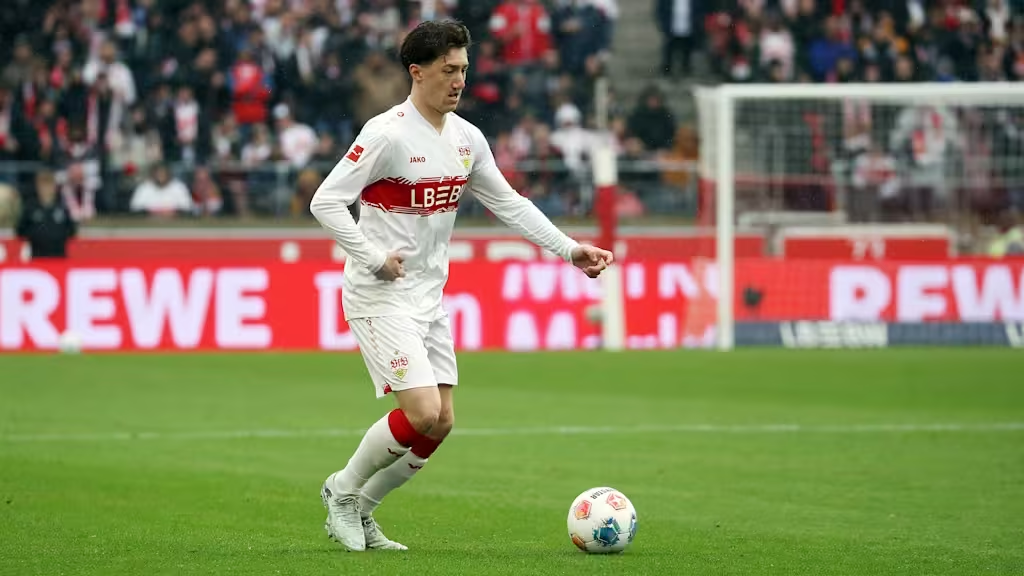
Selling Mac Allister would be controversial, but it could generate significant funds while helping Liverpool rebuild: budget for a midfield better suited to Iraola’s style. Rather than relying on one player to perform several roles, the arrivals of Angelo Stiller and Elliot Anderson would allow Liverpool to replace his qualities collectively. Stiller would provide control and passing range, while Anderson would bring the energy and ball-winning ability needed in a high-tempo system.
The starting midfield would be built around Ryan Gravenberch, Angelo Stiller and Dominik Szoboszlai. Gravenberch remains the primary defensive midfielder, the ball carrier, driving Liverpool through midfield and breaking lines with his athleticism. Stiller operates as the deep-lying controller, dictating tempo and progressing play quickly into dangerous areas with his precise passing. Alongside them, Szoboszlai has the freedom to attack spaces, arrive late in the box and support the front line by switching positions with either one of the front three.
Florian Wirtz is not included in this midfield trio because he would start from the left wing in a free role. Beginning wide allows him to drift into central areas, combine with teammates and create overloads between the lines. As Wirtz moves inside, Szoboszlai can rotate into the spaces he leaves behind, creating a fluid partnership that is difficult for opponents to track.
Liverpool would also benefit from the versatility of Elliot Anderson and Curtis Jones. Anderson can operate as either a No.6 or No.8, bringing energy, pressing intensity and ball-winning ability, while Jones offers flexibility as both an advanced No.8 and a No.10. Having two midfielders capable of filling multiple roles gives Iraola valuable tactical options across a long season.
If more creativity is needed, Wirtz can also drop deeper into midfield to influence build-up play and chance creation. In those situations, Liverpool could introduce a more traditional winger higher up the pitch, maintaining width while allowing Wirtz to dictate the game from deeper areas.
The Attack
Who Stays
- Alexander Isak;
- Hugo Ekitike;
- Federico Chiesa;
- Rio Ngumoha.
Who Leaves
- Cody Gakpo (€45M–€60M)
- Mohamed Salah (Free Transfer).
Who Arrives
- Yan Diomande (RB Leipzig);
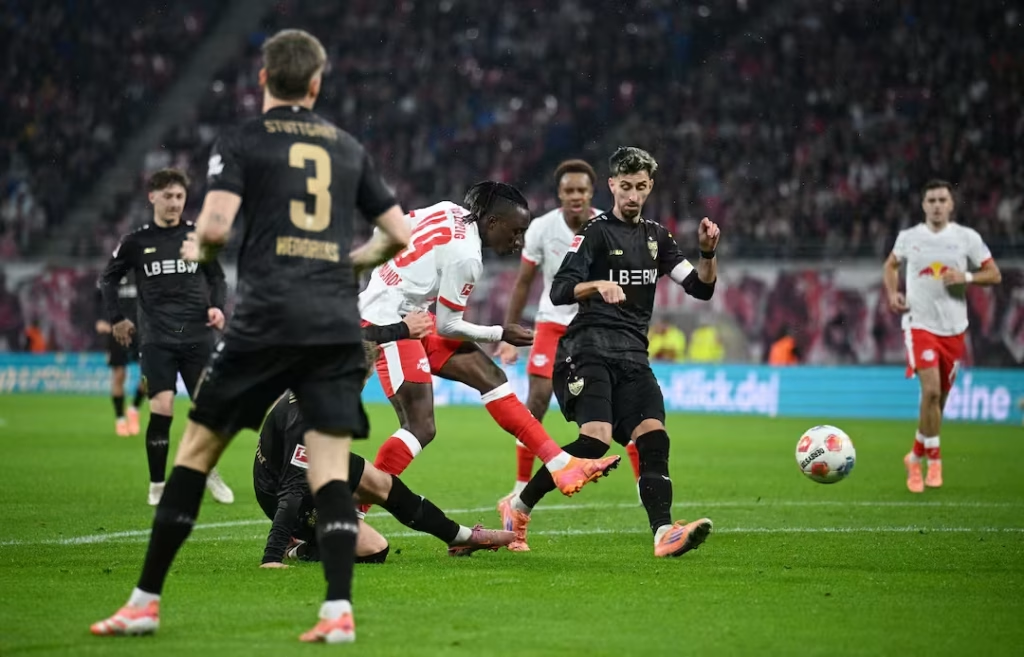
Liverpool should not spend the next decade searching for the next Mohamed Salah, they should build an attack that no longer depends on one player.
That starts with Wirtz drifting into his favourite spaces on the left. It continues with Isak becoming the central reference point. And it accelerates through Yan Diomande on the right wing.
At just 19 years old, Diomande has already shown he can perform at a high level in the Bundesliga. His combination of pace, power and fearless 1-on-1 play makes him an ideal fit for an Iraola side built around intensity and directness.
One moment he is holding the width on the right touchline. The next he is driving inside at defenders, combining with Isak and attacking the penalty area from central areas. His willingness to run beyond the striker adds another dimension to Liverpool’s attack, while his dribbling, physicality and pace allow him to compete immediately at the highest level. His movement becomes even more dangerous alongside players like Wirtz and Szoboszlai, whose creativity creates spaces for him to exploit. Behind him, Mukiele provides the defensive balance that allows him to take risks in the final third.
How the Liverpool Rebuild Would Function
Controlled Aggression.
Under Iraola, Liverpool rebuild would result in dominating games, not through endless possession, but through purposeful attacking football. Every phase of play would be designed to move opponents out of position and create openings as quickly as possible.
Imagine Liverpool facing a deep block at Anfield. Schlotterbeck steps forward from defence and breaks the first line with a pass into Wirtz who dropped centrally. As Wirtz receives the ball in between the lines, Raum immediately overlaps, forcing the opposition defence to shift across. The moment that movement creates space on the far side, Stiller switches play quickly, allowing Diomande to attack the inside channel against a defence that is still trying to reorganise. At the same time, Szoboszlai arrives late into the penalty area while Isak occupies the centre-backs, giving Liverpool multiple threats from the same attack.
The objective is not to keep the ball for the sake of it. It is to constantly force decisions, stretch defensive structures and create pressure until openings appear.
Without the ball, the same principles apply. Liverpool would press aggressively from the front, looking to win possession back as quickly as possible. If an opponent is forced into a long clearance, players like Anderson are tasked with attacking the second ball and immediately restarting another wave of pressure. Even when the press is beaten, the structure remains intact. Schlotterbeck has the pace to recover in transition, while Mukiele provides protection on the right side to prevent counter-attacks from becoming dangerous situations.
Every player has a clearly defined role, but those roles are all connected to a larger collective purpose. The result is a team that plays with intensity and aggression while still maintaining control of the game.
Controlled Aggression becomes the identity of the rebuild.
Financial Reality – Is The Liverpool Rebuild Realistic?
Sales
- Konate (Free);
- Gomez (€18M–€25M);
- Frimpong (€35M–€45M);
- Endo (€8M–€12M);
- Mac Allister (€65M–€80M);
- Gakpo (€45M–€60M).
Estimated Sales Total: €200M
Purchases
- Schlotterbeck (€55M)
- Van Hecke (€40M)
- Raum (€25M)
- Mukiele (€15M)
- Stiller (€50M)
- Anderson (€60M)
- Diomande (€75M)
Estimated Spending Total: €320M
The board would almost certainly spread this Liverpool rebuild across multiple windows.
Priority Signings
- Nico Schlotterbeck;
- Jan Paul van Hecke;
- Nordi Mukiele;
- David Raum;
- Angelo Stiller;
- Yan Diomande.
Build the structure first, then raise the ceiling.
Liverpool Rebuild – The Predicted XI
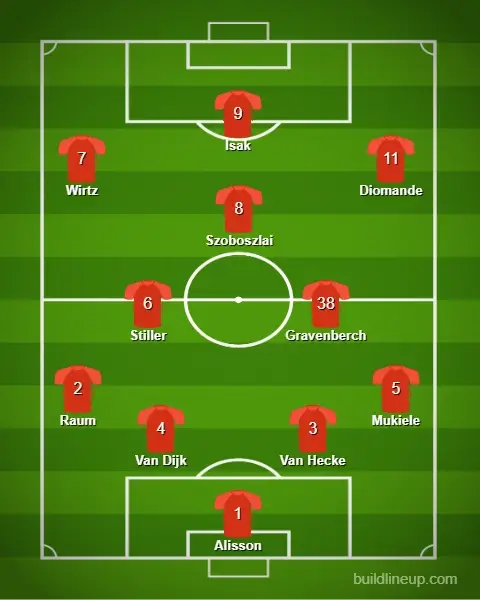
This Liverpool rebuild feels balanced from front to back. Van Dijk provides leadership while Van Hecke offers the ideal blend of Premier League experience and long-term potential alongside him in central defence – not to mention they will play as a duo together in the World Cup for The Netherlands. In midfield, Stiller controls the rhythm of games, Gravenberch drives possession forward and Szoboszlai attacks the spaces created around him.
The shape itself is equally important. Liverpool’s 4-3-3 formation gives Iraola the platform to combine defensive stability with attacking freedom, allowing the midfield to stay compact while Wirtz and the wide forwards rotate into dangerous positions. If you want a deeper breakdown of how the 4-3-3 works and why it remains one of football’s most effective systems, check out our full guide to the 4-3-3 formation.
Further forward, Wirtz remains the creative focal point, constantly finding pockets of space and linking attacks together. Isak provides the finishing quality Liverpool need through the middle, while Diomande adds directness, energy and unpredictability from wide areas. Together, they form an attack capable of creating chances from multiple angles without relying on a single superstar, one of the most important points of this Liverpool rebuild.
The depth behind them is equally important. Ekitike offers a genuine alternative at centre-forward, giving Liverpool a different profile whenever the game demands extra physicality, movement or attacking presence. If Iraola wants a more traditional winger on the left, Ngumoha provides natural width and direct running, allowing Wirtz to play more from central areas. Chiesa completes the attacking group. Injuries and limited opportunities prevented him from establishing himself under Slot, but he has already shown how decisive he can be when given the chance. In a squad built around competition and flexibility, his experience could become a valuable asset.
Final Verdict
The smartest rebuilds begin before decline becomes impossible to ignore. Liverpool learned that lesson with Salah, and now they must apply it again with Van Dijk. This project is not about replacing legends; it is about preparing for what comes after them. It means building a new leadership group, giving Florian Wirtz the platform to become the face of the Liverpool rebuild and allowing Iraola to create a Liverpool that feels entirely his own. The next great Liverpool side may look very different from the last one, and that is exactly the point. The clubs that stay at the top are not the ones that cling to yesterday; they are the ones brave enough to start building tomorrow.
If you enjoyed this Liverpool rebuild, make sure to check out our previous blog about the Top 7 Best Young Midfielders or our blog about the Modern Full-Back. This rebuild is also part of our brand-new Rebuild series, where we explore how some of football’s biggest clubs could reshape their squads and prepare for the future. Let us know your thoughts about this Liverpool Rebuild or join the conversation on our Instagram!